IoT

Smart Cities

IoT and Digital Twins: Revolutionizing Smart City Management

IoT and Digital Twins: Revolutionizing Smart City Management As the world continues to urbanize and cities become more complex, the need for efficient and effective management of resources becomes more pressing. This is where the concept of Smart Cities comes into play. Smart Cities leverage the latest technologies and innovations to create an integrated, connected, and sustainable urban environment. One of the key technologies that enable Smart Cities is the Internet of Things (IoT), which allows for the collection and analysis of real-time data from sensors and devices throughout the city. Another critical technology is the use of 3D digital twins, which can provide a virtual representation of the physical city and its assets.   In this article, I’ll explore how IoT and 3D digital twins can work together to create a more efficient and sustainable Smart City.Consolidating and updating the 3D digital twin of a Smart City is crucial for maximizing its potential value. Having a unified and trusted 3D twin means that all stakeholders, including city planners, administrators, and citizens, have access to the same accurate and up-to-date information. With a single source of truth, stakeholders can make informed decisions based on consistent and reliable data, leading to increased efficiency, productivity, and sustainability. Some of the top benefits of using a 3D digital twin in the context of a smart city include: Improved decision-making: A 3D digital twin provides a comprehensive and accurate representation of a city’s infrastructure, allowing stakeholders to make informed decisions based on reliable data. By consolidating all data from various sources into a single 3D model, decision-makers can gain a better understanding of the city’s assets, operations, and potential issues. This allows them to identify opportunities for optimization, improve urban planning, and address issues such as traffic congestion, environmental sustainability, and public safety. Enhanced collaboration: A 3D digital twin enables collaboration among various stakeholders, including city planners, engineers, contractors, and citizens. By providing a unified and easily accessible platform for data sharing, a digital twin can streamline communication and facilitate cooperation. This can lead to more effective planning, design, and implementation of urban infrastructure projects, as well as improved engagement with citizens. IoT and Digital Twins: Revolutionizing Smart City Management Efficient resource management: By using a 3D digital twin to monitor and analyze the performance of city infrastructure, stakeholders can identify areas where resources are being underutilized or wasted. This allows them to optimize resource allocation, reduce costs, and improve operational efficiency. For example, by using data from sensors to monitor traffic flow, city planners can optimize traffic light timings to reduce congestion and improve travel times. Similarly, by analyzing energy usage data, city managers can identify areas of high consumption and develop strategies to reduce energy waste and lower costs.   For the supply chain manager, a digital twin system of systems can quickly become the most valuable member of the team for many reasons. The digital twin interface allows managers to see what is happening across multiple points and processes in a supply chain in real-time. It can call out potential disruptions or delays before they happen and intelligently predict the best solution with its advanced AI capabilities, allowing users to meet their goals even in today’s turbulent market and global supply chain environment. Digital twins can be programmed to monitor a company’s desired KPIs and suggest adjustments in real-time to avoid costly mistakes and keep performance on track. The remote visual monitoring capabilities allow operations to be planned, executed, and monitored with more safety, accuracy, and efficiency because complex plans can be simulated and observed without physically having to be on-site. Supply chain digital twins are designed to create a clear path to the most efficient and profitable course of action for companies under an infinite number of possible challenges or circumstances. A consolidated 3D digital twin can provide a more comprehensive understanding of the physical city and its assets, including buildings, infrastructure, and transportation. This can lead to improved planning and scheduling of maintenance and repairs, as well as more efficient use of resources. For example, by having a complete understanding of the location and condition of assets and equipment within the city, maintenance staff can avoid redundant inspections or unnecessary repairs, reducing costs and downtime.In a Smart City, IoT sensors and devices can provide real-time data on everything, from traffic flow and air quality to energy usage and waste management. This data can be integrated into the 3D digital twin, providing a holistic view of the city’s current status and enabling stakeholders to make data-driven decisions. For example, city planners can use real-time traffic data to optimize traffic flow and reduce congestion, while waste management authorities can use data on bin fill levels to optimize waste collection routes.By combining the power of IoT and 3D digital twins, Smart Cities can become more efficient and sustainable, For example, city administrators can use real-time data from IoT sensors to identify areas where energy consumption can be reduced, and then use the 3D digital twin to simulate and test different scenarios for optimizing energy use. This can lead to reduced energy costs and a more sustainable urban environment. The benefits of IoT and 3D digital twins in Smart Cities extend beyond just operational efficiency., These technologies can also improve the quality of life for citizens. For example, by integrating IoT sensors into public transportation, citizens can receive real-time information on bus or train schedules, reducing wait times and improving their overall transportation experience. Additionally, by integrating data on air quality into the 3D digital twin, city planners can identify areas with high levels of pollution and take action to reduce emissions, improving the health and well-being of citizens. Conclusion In conclusion, the consolidation and updating of the 3D digital twin is crucial for Smart Cities to maximize their potential value. By combining the power of IoT and 3D digital twins, Smart Cities can become more efficient, sustainable, and citizen-focused. These technologies provide a powerful tool for city planners and administrators to

IoT and Digital Twins: Revolutionizing Smart City Management Read More »
Chiyoda Corporation and Visionaize, Inc. announce partnership on 3D Digital Twin technology

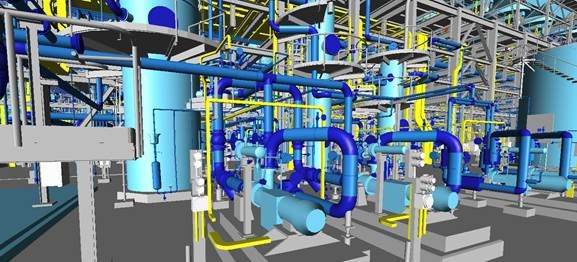
Chiyoda Corporation and Visionaize, Inc. announce partnership on 3D Digital Twin technology Chiyoda Corporation (Chiyoda)*1 is pleased to announce that it has entered into a Memorandum of Understanding (MOU) with Visionaize, Inc. (Visionaize)*2 to jointly seek business opportunities utilizing a 3D digital twin platform.   We have agreed to develop business models for the solution services based on Chiyoda’s engineering with IoT/AI/digital technologies utilizing Visonaize’s 3D digital twin platform to realize optimized plant operation and maintenance.   For sustainable plant operation, it is effective to use a 3D operational digital twin that pairs the real-world plant with its identical digital replica. Connecting this virtual digital twin with real-time and historical data from IoT sensors and operational systems allows plant operators to understand data more quickly from multiple operational systems within the visual context of the plant to make better, faster decisions that are data-driven. This results in improved safety and efficiency as workers execute their daily tasks. For a digital twin to be trusted by plant workers, Model Management of Change (MMOC) is critical to keep the twin up to date as an accurate “as-built” / “as-is” model of the plant and its assets. The cost associated to build and maintain a 3D model of the plant has long been a hurdle for many plant owners in justifying the investment. With this MOU, Chiyoda is now able to offer affordable solutions that minimize this cost and make the most out of Chiyoda’s engineering and technologies. “With this collaboration, we have finally realized the long-awaited ultimate solution for providing an immersive experience for plant owners, which has the potential to transform their entire O&M activities.”, said Toru Yoneyama, New Business Development Section Leader of Chiyoda.   “We are thrilled to join forces with Chiyoda to deliver this exciting new immersive solution that helps operational teams quickly gain insights from real-time and historical data to make better, faster decisions that optimize plant O&M activities and improve worker safety.” said Brian Hall, Vice President Global Alliances of Visionaize.   *1 About Chiyoda I. Headquarters: 4-6-2, Minatomirai, Nishi-ku, Yokohama, Japan II. Main Business: Integrated engineering including consulting, planning, engineering, procurement, construction, commissioning and maintenance for facilities related to gas, electricity, petroleum, petrochemical, chemical, pharmaceutical, antipollution, environment, preservation and other services.Mineral resource exploration and investment, including oil and gas. III. Representative: Mr. Masakazu Sakakida, Chairman of the Board, President & CEO *2 About Visionaize I. Headquarters: 2150 North First Street, Suite 427 San Jose, CA 95131 II. Main Business: Visionaize is focused on building the Industrial Metaverse to help complex industrial facilities operate more safely and efficiently thereby saving lives, maximizing productivity, and reducing carbon emissions. As a global leader of Operational 3D Digital Twin technology, Visionaize is working to drive innovation and realize these important initiatives with leading industrial companies around the world. www.visionaize.com III. Representative: Mr. Vikas Agrawal, Chief Executive Officer  For more information, please contact:Chiyoda CorporationIR, PR & CSR DepartmentURL: https://www.chiyodacorp.com/en/contact/index.php  

Chiyoda Corporation and Visionaize, Inc. announce partnership on 3D Digital Twin technology Read More »

Data Integration

How to sustain an operational 3D Digital Twin

Part 3 of the 4 part series: Digital Twins through the full lifecycle How to Sustain an Operational 3D Digital Twin “The operational lifecycle of a 3D Digital Twin must incorporate ongoing reality capture in order to sustain its accuracy and fidelity” Digital Twin Consortium White Paper: Reality Capture: A Digital Twin Foundation While reality capture is a key requirement for sustaining a 3D Digital Twin system, it must be broadened to incorporate three important features (outlined below) to ensure this critical operational tool can live on and support the operation through its long, useful life.   Continuous Detection / Continuous Integration (CI/CD) management of change: Learning from best-in-breed software engineering techniques, sustainment requires a structured, human-in-the-loop, automated process that monitors and detects changes in the physical operation as they occur, including, but not limited to digital reality capture. Granular, modular version control and governance: Model version control and governance over historical, work-in-progress, and updated versions of the model, with rich, searchable visual metadata templates and catalogs. Always-on orchestration and synchronization: A way to synchronize and orchestrate access to models as they are being maintained while maintaining 24×7 live access to the source truth model of record. This is a key requirement for it to be “Operational”. Let’s dig into each of these. Continuous Detection / Continuous Integration management of change process  Over the past 15 years tremendous benefits have been realized from agile software engineering methods. Key among these developments have been continuous development / continuous integration (CI/CD), which has allowed for the unprecedented acceleration of bringing functions to market. 3D Digital Twin Systems are a collection of data and software that can leverage that same agile philosophy. A robust, CI/CD-enabled model management of change should:  Use best available techniques to detect and log changes: whether your organization has the latest and greatest in reality capture / change detection, or relies on simple scratchpad note taking, change detection should be visually and contextually integrated into the model. Schedule new visual content capture: whether new visual content is available, or must be manually gathered, the tasks should be integrated to follow scheduled and managed workflow. Apply AI and rule-based logic: Newly captured visual content must be taken through the process in a structured, way, with the ability for AI-based automation to convert input to model structures, and augment models. Human in the loop: AI-based methods must be backed up by human judgement, particularly in critical or sensitive areas. Probabilistic evaluation and reinforcement learning allow systems to alert when changes are simple and highly probably accurate or when human review is needed. Rules and thresholds supported by configurable policies are critical. Granular, modular version control and governance   3D Digital Twins are a rich, multi-dimensional reflection of physical reality. The information they encapsulate is not monolithic—that is—the model reflects many individual components, and systems of systems, each of which can be separately involved in changes and differing states of completion. For example, you may be planning a small construction or modification of the plant and implementing infrastructure changes incrementally. Or you may simply want to reflect the actions being planned in a turn-around or new setup separately from what is “live.” Critically, each individual component must be maintainable and traceable separately, without impacting the use of the model for daily operations. Each component must be versioned separately, with the visibility of who and how it was changed. That is granular, modular version control. Governance is the process of defining and structuring how model changes can be made, who has the right or privilege to make those changes, and how that authority is managed and enforced. The model owner and stakeholders must be able to define a customized process that suits its organizational security and other institutional needs. That customized process ought to be software defined – a configuration, rather than reprogramming or redesigning the model software. Configuration-based governance allows some organizations (and some parts of the model) to be managed with a “light touch” and others to be more heavily governed, as required by regulation, management policy, or other concerns, such as safety. Finally, the model, its versions, and its change history should be visible and auditable. Always-on orchestration and synchronization workflow Often overlooked in the sustaining process for a 3D Digital Twin is the ability to manage between the work in process changes that may be taking place as parts of the plant and its digital twin are modified. Orchestration and synchronization of the live model goes hand in hand with the design requirement for modularity and granularity. No Operations Leader wants the activity of updating the model to render it useless during this activity. Therefore, a structured orchestration and synchronization process, integrated with the change management workflow as defined, and the ability to do small, incremental changes at a fine grain make managing change robust, low effort, and non-disruptive. What operators should take away Managing change and incorporating it into the model for the useful life of the physical asset is critical capability of Digital Twins, particularly 3D Digital Twins. Making the sustainment easy, and not cost prohibitive, operators should work with a 3D Digital Twin that: Establish a 3D Digital Twin as your System of Record for visual information during the operational life of the asset/system. Work with a 3D Digital Twin partner who has a robust Model Management of Change that can be adapted to your unique operational, regulatory and management needs. Don’t underestimate the up-front effort to define. governance for your 3D Digital Twin, just as other systems of record require. Software tools that automate detection and integration tasks will minimize the cost and effort. Work with a 3D Digital Twin partner who have experience with the creation and ongoing, lifelong maintenance of the model over time.

How to sustain an operational 3D Digital Twin Read More »