AI

The Rise of Autonomous Industrial Control: Why Real-Time Optimization (RTO) Is Becoming the Brain of the Modern Plant

The Rise of Autonomous Industrial Control: Why Real-Time Optimization (RTO) Is Becoming the Brain of the Modern Plant   Industrial operations across the world are entering a new era. With rising energy costs, growing sustainability mandates, widening skill gaps, and unpredictable process variability, manufacturers can no longer rely on slow, manual decision-making. Plants need systems that can understand themselves, respond in real time, and continuously self-optimize.   This is where Real-Time Optimization (RTO) is rapidly emerging as the brain of the modern plant. Combined with Digital Twins, AI-driven analytics, and GenAI-powered plant assistants, RTO is enabling a new level of autonomous industrial control that was impossible even five years ago.   In this blog, we explore how RTO is redefining operational excellence and why leading global industries are adopting platforms like Visionaize to spearhead this transformation. WHAT IS REAL-TIME OPTIMIZATION? THE NEXT EVOLUTION BEYOND TRADITIONAL AUTOMATION   While control systems (DCS/PLC/SCADA) stabilize processes, they are not designed to optimize. RTO sits above automation layers, continuously analyzing:   Asset behavior Sensor and historian data Production constraints Energy prices Equipment health Environmental conditions   RTO then calculates the best operating setpoints, not once a day or once per shift, but every few seconds.

The Rise of Autonomous Industrial Control: Why Real-Time Optimization (RTO) Is Becoming the Brain of the Modern Plant Read More »

Why AI Optimization is Outperforming Traditional Advanced Process Control

Why AI Optimization is Outperforming Traditional Advanced Process Control   In today’s process industries, operational efficiency is everything. For decades, Advanced Process Control (APC) has been the go-to technology for keeping systems stable and efficient. But a new player—AI optimization—is raising the bar. Rather than replacing APC, AI is increasingly being integrated into control strategies, delivering faster adaptation, deeper insights, and smarter decision-making in complex, dynamic environments. Here’s how AI optimization compares to traditional APC—and why many plants are embracing a hybrid approach that combines the best of both worlds. The Traditional Role of APC   Advanced Process Control, often built around Model Predictive Control (MPC), is rooted in first-principles models such as thermodynamics or fluid flow equations. Operators define setpoints, and APC keeps the process within those bounds using PID or MPC algorithms.   Strengths of APC:   Highly reliable in stable, well-understood conditions Proven safety and regulatory compliance Predictable performance when process dynamics are fixed Limitations:   Requires manual model updates to adapt to changing feed quality, ambient conditions, or equipment aging Optimizes locally rather than globally Struggles with fast-changing or highly nonlinear processes Needs periodic re-identification and expert tuning How AI Optimization Works   AI optimization takes a data-first approach. Instead of relying solely on static equations, AI systems use machine learning, neural networks, and reinforcement learning to learn directly from real plant data—both historical and real-time sensor streams.   These models can:   Predict system behavior across a wide range of conditions Continuously identify optimal operating points Adapt in milliseconds to shifts in process behavior Spot hidden inefficiencies through digital twin simulations Predict and prevent equipment failures With adaptive learning rates, AI can detect and correct for model drift automatically, avoiding the need for costly offline re-modeling.   AI vs. APC: The Future of Process Optimization   Advanced Process Control (APC) has long been the workhorse of industrial process optimization. By leveraging physics-based models and control loops, APC improves stability, minimizes variability, and keeps operations within safe limits. But as industries face growing demands for efficiency, adaptability, and sustainability, Artificial Intelligence (AI) optimization is emerging as a powerful next step.   Scope & Flexibility   APC operates within the confines of model-based control—typically linear or mildly nonlinear—with a limited set of variables. This makes it effective for well-understood processes, but less suited to rapidly changing conditions. AI, on the other hand, is data-driven and inherently multivariable. It can handle nonlinear dynamics and uncertainty, enabling optimization in more complex and variable environments.   Adaptability   APC systems often require manual updates when process conditions change or models drift, leading to slower responses. AI-based optimization can continuously learn from incoming data, adapting in real time without the need for lengthy manual recalibration.   Optimization Horizon While APC focuses on short-term, local objectives (like maintaining setpoints or minimizing variability), AI can extend the horizon to long-term and multi-objective goals—such as balancing cost, energy consumption, throughput, and sustainability targets simultaneously.   Deployment Deploying APC can be expert-intensive, with long lead times to build, validate, and tune models. In contrast, AI solutions increasingly benefit from AutoML and prebuilt frameworks, enabling faster deployment and easier scalability across multiple units or sites.   Data Utilization   APC typically uses data for control feedback and periodic calibration. AI leverages the full spectrum of available information—historical datasets, real-time sensor feeds, and even contextual business or environmental data—unlocking insights and optimizations that go beyond the capabilities of traditional control systems.   The Hybrid Approach: Best of Both Worlds   The most forward-thinking plants are adopting AI + APC hybrid architectures.   In this setup:   APC ensures baseline stability and safety AI provides dynamic optimization targets and adapts to changing conditions Common operating modes:   Advisory (Open-loop): AI recommends setpoints; operators review and apply. Autonomous (Closed-loop): AI writes directly to APC/DCS setpoints. Supervisory: AI sets overarching targets while APC handles local control. Deployment typically starts with offline simulations and validation, moves to operator-in-the-loop advisory mode, and gradually shifts toward semi-automatic or fully autonomous control.   AI’s Challenges   AI’s performance depends heavily on:   High-quality, well-integrated plant data Robust computing infrastructure Overcoming regulatory and explainability concerns Key Benefits of AI + APC   Stability: APC maintains safe, proven control loops Intelligence: AI optimizes proactively and predicts issues before they happen Adaptability: AI evolves with changing plant conditions Efficiency: Reduced waste, improved energy use, and higher throughput Final Word   Advanced Process Control will remain a cornerstone of industrial operations for years to come. But AI optimization is proving to be the sharper tool when processes are complex, data is abundant, and conditions are constantly changing.   The winning strategy? Use APC for rock-solid stability and safety, and let AI handle high-level optimization. Together, they deliver a resilient, future-ready control system that maximizes performance while minimizing risk. Visionaize’s Signal Miner combined with Advanced Process Control (APC) delivers a comprehensive, end-to-end optimization solution for industrial operations. Signal Miner leverages advanced AI algorithms to analyze vast amounts of historical and real-time plant data, uncover hidden patterns, and predict optimal setpoints. APC then takes these insights and ensures precise, stable control of critical process variables, maintaining safety and compliance while implementing performance improvements. Together, they bridge the gap between predictive intelligence and real-time execution—Signal Miner driving continuous, adaptive optimization, and APC ensuring robust, reliable control—resulting in higher efficiency, reduced downtime, lower operating costs, and consistently improved production outcomes.

Why AI Optimization is Outperforming Traditional Advanced Process Control Read More »

Visual Intelligence Meets Context: How Visionaize Is Redefining Industrial Operations with AI and Digital Twins

Visual Intelligence Meets Context: How Visionaize Is Redefining Industrial Operations with AI and Digital Twins   Modern industrial operations demand more than just data-they demand clarity, speed, and actionable insight right when and where it matters most. Operations leaders, plant managers, and technology heads are constantly under pressure to improve reliability, reduce downtime, and enhance asset performance. Yet, one key challenge persists across sectors: lack of contextual visibility into what’s actually happening across complex operations. This is where Visionaize steps in. By combining 3D Digital Twins with AI-powered contextual intelligence, Visionaize is transforming the way industries monitor, simulate, and optimize their operations. It is not just data; it is intelligence in action-visual, interactive, and purpose-built for decision-making. The Data-Insight Gap in Industry   Industrial facilities generate massive amounts of data from sensors, systems, and machines. However, most of this data is siloed, text-heavy, and difficult to interpret in real time. Traditional dashboards only tell part of the story.   Imagine trying to understand a critical pump’s health by scrolling through spreadsheets, reports, and control system logs. It’s like trying to navigate a city using only street names and coordinates, without a map.   Now imagine seeing that same pump as part of a full 3D visual of your plant, color-coded for health status, with live performance data, historical trends, and AI-generated alerts-all in one screen. That is the Visionaize difference.   Visionaize’s Visual + Contextual AI Approach   At the heart of Visionaize’s offering is a 3D Digital Twin platform enriched by AI and Machine Learning. It delivers not just visual clarity but contextual intelligence, which means:   You do not just see that an asset is underperforming – you understand why You can simulate failure scenarios and see their impact on upstream and downstream processes You get AI-powered predictions with real-time visual markers right on your plant layout This is crucial in industries where every minute of downtime costs thousands, and decision-makers need actionable insight at a glance.   A Quick Look at the Tech   1. 3D Digital Twin Integration   Visionaize ingests CAD models, engineering diagrams, and real-time operational data to create a digital replica of the physical plant. Unlike static models, this twin evolves with your operations.   2. AI-Powered Insight Layer   The system leverages AI and predictive analytics to monitor equipment behavior, forecast anomalies, and simulate performance trends. It is not just data-it is decision support.   3. Contextual Visualization   Operators can view asset health, maintenance logs, energy usage, and more-all mapped visually to the 3D environment. Alerts are shown not as pop-ups but as visual cues on actual equipment.   Real-World Impact: A Steel Plant Example   Steel plants operate in high-temperature, high-vibration environments, with critical assets like blast furnaces, continuous casters, and rolling mills running round the clock. Any unexpected failure can halt production for days.   Visionaize deployed its solution at a large integrated steel plant,delivering:   Predictive health monitoring for continuous casting machines and roller bearings using AI algorithms trained on historical failure data 3D contextual views of hot zones, allowing safety and maintenance teams to inspect inaccessible areas remotely Real-time alerting on motor and gear anomalies, helping avoid production losses during peak load periods Digitally simulated maintenance schedules, reducing the overall planned shutdown time by 12 percent This led to extended asset life, improved safety, and minimized production disruptions.   GenAI and Industrial Workflows: The Next Leap   Visionaize is also exploring the use of Generative AI to make industrial workflows even more intelligent. TheVizi Copilot offers natural language interaction with plant data.   Imagine this:   “Show me all rotating equipment with performance deviations over the last 30 days.”   “Simulate energy output if we reduce compressor load by 10 percent.”   These are not commands from a distant future. They are being tested and refined today, within Visionaize’s industrial ecosystem.   Why This Matters to Business and Technology Leaders   For business leaders, Visionaize offers a path to increased operational excellence. The ROI comes in:   Less downtime Faster troubleshooting Better workforce efficiency Safer operations For technology leaders, it is a platform that blends OT and IT, integrates with existing ERP and EAM systems, and reduces data overload by making insights instantly accessible and visually intuitive.   Where Visionaize Stands Out   Many platforms offer dashboards. Some offer simulations. A few claim to be AI-enabled. But very few deliver:   ✅ A real-time 3D Digital Twin ✅ With AI predictions visualized directly on plant assets ✅ And context-aware intelligence that reduces guesswork This is where Visionaize excels. It is not about throwing more data at users. It is about making complex industrial data intuitive and actionable.   Final Thoughts   The industrial world does not need more software. It needs smarter, faster, and more contextual ways to make decisions. Visionaize delivers just that-by giving operators, engineers, and executives the tools to see their plants like never before.   ThIf you are ready to move from reaction to prediction, from fragmented data to unified insight, and from text-heavy reports to immersive plant intelligence-Visionaize is your partner in that journey.

Visual Intelligence Meets Context: How Visionaize Is Redefining Industrial Operations with AI and Digital Twins Read More »

Robots + Digital Twin: Powering Next Gen Industrial Operations

Robots + Digital Twin: Powering Next Gen Industrial Operations   In today’s fast-paced industrial world, manufacturing, energy, and logistics leaders are increasingly turning to two transformative technologies: robots and digital twins. Each offers unparalleled operational advantages-but when combined, their impact multiplies. Here’s how adopting this powerful pair, particularly with Visionaize solutions, can reshape industrial efficiency, safety, and competitiveness. Smarter Plants. Safer Teams. Real-Time Decisions. Powered by Robots + Digital Twins. 1. The Rise of Robots in Industry   AI-driven robots are no longer futuristic; they’re the backbone of modern production lines:   The industrial robotics market is projected to double – from $17.6 billion in 2024 to $39 billion by 2035 – driven by AI and automation trends ( visionaize.com, roboticstomorrow.com). Collaborative robots, or cobots, safely work alongside humans – handling precision welding, material handling, assembly, and more. Humanoid robots are entering warehouses and production lines, e.g., Foxconn and Nvidia working together to deploy robots in AI server assembly ( reuters.com ). By 2050, there could be 300 million humanoids worldwide, addressing labor shortages ( marketwatch.com).   2. Enter Digital Twins   A digital twin is a real-time, 3D digital replica of an asset or process – driven by IoT data, analytics, and AI. For industries, it’s a game-changer: They can reduce inspection time (e.g., 1 hour in Visionaize V Suite = 8 field hours) (visionaize.com). Digital twins enable predictive maintenance, spotting issues before failures occur (visionaize.com). Market forecasts suggest the digital twin landscape will grow at 35.6% CAGR to 2030, reaching $154 billion (automationmag.com) .   3. The Power of Integration: Robots + Digital Twins   Combining robots with digital twins opens a realm of operational excellence:   1. Automated Training and Simulation   Robots can be trained virtually via digital twins – leading to safer, faster deployment. Nvidia’s Omniverse “Mega” uses this approach to optimize robot fleets in simulation (iottechnews.com).   2. Real-Time Control & Adaptation   Reinforcement-learning–driven robots in additive manufacturing can be dynamically adjusted based on twin feedback, maximizing precision.   3. Operational Insights & Safety   Digital twins, powered by sensor data, can predict hazards, reducing human exposure by identifying issues early (visionaize.com).   4. Sustainability & Efficiency   Robots guided by digital twins help optimize energy use and reduce waste – crucial as markets demand greener practices.   4. Visionaize: At the Cutting Edge   Visionaize stands out by deeply integrating digital twin functionality with robotic operations: Immersive 3D digital twins powered by the Industrial Metaverse offer real-time operational intelligence (visionaize.com). In the Oil & Gas sector, Visionaize enables reduced downtime, increased productivity, and safer operations via 3D twins ( visionaize.com ). By integrating robot operations into its digital twin platform, Visionaize empowers enterprises to: Train robots virtually, avoiding costly errors. Monitor fleet health and performance remotely. Predict maintenance needs to reduce downtime. Optimize energy and material usage robot-involved processes. 5. Use Cases & Business Benefits   Let’s visualize actual benefits for industrial businesses:   Use Case Robots Alone With Digital Twin Assembly Training On-site trial and error Smooth virtual simulation, faster ramp-up Predictive Maintenance Routine checks, unexpected breakdowns Sensor-based alerts, scheduled robot service before failure Process Optimization Manual adjustments over time Simulate options for speed, waste, or energy efficiency Safety Management Isolated safety zones Virtual hazard modeling, risk reduction before deployment Remote Supervision Limited to field visits Remote robot/twin monitoring, instant commands Regulatory Audits Paper logs, manual data retrieval Twin logs and visualizations for quick compliance evidence   6. Steps to Adoption     1. Pilot Project   Choose a robot-involved task-e.g., material handling-deploy a digital twin model.   2. Gather Real-Time Data   Integrate IoT sensors on robots, feed data into the digital twin.   3. Train & Simulate   Use twin to simulate edge cases. Optimize robot tasks before introducing them.     4. Deploy & Monitor   Launch robots onsite. Use the twin dashboard to monitor performance.   5. Expand & Iterate   Scale to multiple sites and asset types. Refine models and processes.   With a partner like Visionaize, this journey is accelerated through proven platforms and cross-sector expertise.   7. Market Momentum: What’s Next   Major manufacturers like Foxconn and BMW are deploying humanoid robots and digital twin–simulated environment production lines ( wired.com, coladv.com reuters.com, arxiv.org ). The humanoid robotics market is projected to reach $1.4 trillion by 2050, driven by labor challenges and automation demand ( marketwatch.com ). The industrial metaverse is gaining traction, and industrial twin platforms are reshaping smart factories ( wired.com ). Enterprises investing now gain early-mover advantage, better ROI, and sustainable operations.   8. Strategic Takeaways for Business Leaders   Boost ROI: Up to 40% reduction in downtime and maintenance costs through predictive twin-based workflows . Enhance Safety: Workers spend less time in risky zones thanks to twin-informed planning. Scale Fast: Virtual simulations speed up robot deployment across multiple sites. Stay Compliant & Sustainable: Twin documentation and predictive planning support audits and ESG goals. Future-Proof Operations: Be ready for AI-driven, humanoid-enabled industry 4.0 and beyond.   Conclusion: A New Era of Intelligent Operations   Robots and digital twins individually represent significant industrial advances. Together, they form a synergistic powerhouse. Visionaize’s blend of immersive digital twins, AI analytics, and integration capabilities positions it as a leading partner in this revolution.   For business leaders aiming to:   Reduce risk, Protect profitability, Strengthen safety, And pivot rapidly to meet market demands— the fusion of robotic automation and real-time digital twins offers a strategic path forward.  

Robots + Digital Twin: Powering Next Gen Industrial Operations Read More »

Why Digital Twins Are a Strategic Imperative for Utility CEOs

Why Digital Twins Are a Strategic Imperative for Utility CEOs In an era defined by increasing demand, regulatory pressure, and infrastructure complexity, the utilities sector faces a critical inflection point. Legacy systems, aging assets, and siloed data have long hindered operational efficiency. But as the energy transition accelerates and digital maturity becomes a boardroom priority, utility companies are rapidly turning to Digital Twin technology as a strategic enabler of transformation.   The Urgency for Change   For CEOs and Heads of Operations in the utilities industry, the challenges are familiar:   Unplanned downtime that leads to customer dissatisfaction and revenue loss Inability to predict equipment failure or optimize maintenance cycles Fragmented views of asset performance across plants, substations, and grids Mounting pressure to meet ESG goals and ensure long-term sustainability Traditional approaches to asset management and monitoring are no longer sufficient. Utilities need real-time insights, predictive foresight, and operational clarity—and this is exactly where Digital Twin solutions are making their mark.   What Is a Digital Twin, Really?   A Digital Twin is a real-time, virtual replica of a physical system—whether that’s a substation, a water treatment plant, or a solar farm. More than just a 3D model, it integrates live data from sensors, historical logs, and enterprise systems to simulate, analyze, and optimize asset performance. The result? Operators and executives gain actionable intelligence about their physical operations in a fully visual and interactive environment.   Visionaize: Powering Digital Twin Adoption for the Utilities Sector   At the forefront of this transformation is Visionaize, a pioneer in Digital Twin innovation. Visionaize helps utility companies harness the power of 3D visualization, AI-driven insights, and predictive analytics through its industry-proven platform and tools:   1. 3D Digital Twin Platform   Visionaize’s platform creates immersive 3D replicas of complex utility infrastructure—think turbines, transformers, cooling systems, and entire grid networks. This enables operations teams to visualize assets in real time, identify anomalies faster, and reduce the risk of failure.   With this 3D operational context, maintenance teams no longer have to sift through spreadsheets or technical drawings—they get a unified, spatially accurate view of every asset’s status, condition, and location.   2. Signal Miner   Utilities generate terabytes of time-series data, but most of it remains underutilized. Signal Miner is Visionaize’s powerful anomaly detection engine that cuts through the noise to identify early signs of failure—well before they escalate into costly breakdowns.   For example, in a recent deployment at a major energy provider, Signal Miner helped detect vibration inconsistencies in cooling fans, allowing the team to intervene weeks in advance and avoid a full system outage.   3. Vizi CoPilot   Today’s decision-makers need insights, not just data. Vizi CoPilot is Visionaize’s AI-driven assistant that delivers instant, contextual responses across the Digital Twin environment. From asking for a specific asset’s maintenance history to comparing performance KPIs across regions, Vizi CoPilot empowers CEOs, plant heads, and engineers alike to make smarter, faster decisions—using natural language.   Use Case: Streamlining Operations in a Power Distribution Utility   Let’s consider a utility provider managing a large fleet of power distribution assets across multiple regions. With Visionaize’s Digital Twin platform in place: Field engineers access real-time 3D views of substations before visiting sites, reducing inspection time by 40%. Signal Miner detects pressure drop patterns in transformer units, alerting teams to probable faults days in advance. The leadership team uses Vizi CoPilot to simulate operational scenarios and compare maintenance ROI across zones. The outcome? Downtime reduced by 30% Maintenance costs optimized by 20% System reliability increased, driving both customer satisfaction and regulatory compliance Why It Matters to Business Leaders   For executives, the value proposition of Digital Twin adoption goes beyond operational efficiency. It enables:   Strategic agility: Simulate and plan for infrastructure changes, capacity shifts, or crisis response. Data-driven governance: Align performance metrics with regulatory reporting and ESG targets. Cross-functional visibility: Break silos between engineering, IT, and business units with a shared digital thread. By bridging the physical and digital realms, Visionaize is helping utilities transition from reactive to proactive management, driving resilience and innovation in an industry that’s mission-critical to modern life.   Building the Future of Smart Utilities   The move to smart grids and sustainable infrastructure demands more than sensors and dashboards—it requires a foundational shift in how utilities see, analyze, and act on their data. Digital Twins are no longer a futuristic concept; they are a business necessity. And Visionaize is here to lead that evolution.   Ready to See It in Action?   If you’re looking to reduce operational risks, accelerate maintenance efficiency, or gain real-time visibility into your utility assets, it’s time to explore what Visionaize can do for you.   👉 Request a Demo and discover how our Digital Twin solutions can power your next leap forward.

Why Digital Twins Are a Strategic Imperative for Utility CEOs Read More »

Why Industrial Plants Can’t Afford to Ignore AI in 2025

Why Industrial Plants Can’t Afford to Ignore AI in 2025   In 2025, industrial plants are no longer just centers of production—they are data ecosystems. The modern plant is expected to be lean, efficient, sustainable, and resilient in the face of growing global challenges. And Artificial Intelligence (AI) is no longer an optional upgrade; it’s the operational backbone for those who wish to stay competitive.   Let’s explore why AI adoption is no longer a “maybe someday” but a “must now” decision—and what that means for your operations.   The Pressure to Do More with Less   Global industries face increasing demand for energy efficiency, production reliability, and environmental accountability. According to a McKinsey report, AI can reduce machine downtime by up to 30% and extend the life of assets by 20% —a game-changer for cost-sensitive sectors like power, chemicals, oil & gas, and utilities.   Key Drivers Pushing AI Adoption:   Rising operational complexity Scarcity of skilled manpower Tight regulatory scrutiny on emissions Volatile energy and raw material costs Pressure to deliver net-zero targets   The Cost of Inaction is Too High   Unplanned downtime costs manufacturing companies an estimated $50 billion annually(Deloitte). For power and chemical plants, every minute of failure can cause cascading issues across systems and markets.   Without AI-driven monitoring and predictive insights, plants continue to rely on outdated preventive maintenance schedules or reactive firefighting—which often leads to over-servicing, underperformance, or both.   Bottom Line: Ignoring AI in 2025 doesn’t just slow you down. It costs real money.   AI in Action: Beyond the Buzzwords   AI today is not just about smart dashboards. The real transformation lies in:   Predictive Maintenance– AI detects micro-anomalies and alerts maintenance teams before a breakdown. Digital Twins – AI-powered simulations of real assets allow operators to test, predict, and optimize operations in a virtual environment. Generative AI Assistants – Industrial copilots can now respond to complex queries, summarize reports, and assist in root cause analysis.   The Visionaize Edge: Real Impact, Not Just Intelligence   At Visionaize, we help industrial plants move from raw data to real-world decisions. Our V-Suite platform, featuring Signal Miner and Vizi CoPilot, is purpose-built to eliminate unplanned downtime, improve asset performance, and drive sustainability.   Signal Miner uses AI to detect anomalies early and optimize energy consumption. Vizi CoPilot helps engineers interact with complex plant data using natural language. With our 3D Digital Twin technology we bring visualization and decision-making into one immersive experience.   This integrated approach is already helping industries reduce energy waste, prevent equipment failures, and meet ESG goals—all while improving ROI.   The Numbers Don’t Lie   A recent BCG study estimates that AI can deliver up to 20% efficiency gains in operations and up to 15% reduction in energy consumption in industrial settings. In power generation alone, AI-based load forecasting has improved grid reliability and reduced generation costs by 10-15%.   Looking Ahead: AI is Not Just for the Big Players   In 2025, AI is more accessible, affordable, and industry-ready than ever before. You don’t need a massive transformation budget. You need:   The right use case A scalable pilot An experienced partner   And that’s where Visionaize comes in.   Final Thoughts   AI is not a future upgrade—it’s a current competitive advantage. Industrial plants that wait for the “perfect time” will find themselves playing catch-up in an increasingly digital world.   If you’re ready to optimize, predict, and transform—Visionaize is ready to help.

Why Industrial Plants Can’t Afford to Ignore AI in 2025 Read More »

Operational Efficiency and Decarbonization: The Synergy in Industrial Transformation

Operational Efficiency and Decarbonization: The Synergy in Industrial Transformation   In the industrial sector, the dual pursuit of operational efficiency and decarbonization has become paramount. These objectives, once considered distinct, are now recognized as complementary forces driving sustainable growth. The integration of digital twin technology, particularly through solutions like those offered by Visionaize, exemplifies how industries can simultaneously enhance performance and reduce carbon footprints. Understanding Digital Twins in Industry   A digital twin is a virtual replica of a physical asset, process, or system that mirrors its real-world counterpart in real-time. By leveraging data from sensors and other sources, digital twins provide a comprehensive view of operations, enabling predictive analysis and informed decision-making. This technology has become instrumental in optimizing industrial processes, leading to significant improvements in efficiency and sustainability.   Enhancing Operational Efficiency   Implementing digital twins allows industries to identify bottlenecks, predict equipment failures, and optimize maintenance schedules. For instance, a leading global food manufacturing company faced challenges with unplanned downtime and lack of operational visibility. By adopting Visionaize’s digital twin solutions, they enhanced productivity and corrected unexplained production interruptions, leading to improved operational efficiency.   Similarly, McKinsey reports that a factory digital twin developed for an industrial player was used to redesign the production schedule, compressing overtime requirements and resulting in a 5 to 7 percent monthly cost saving. By accurately simulating real-time bottlenecks on the production line, the digital twin also uncovered hidden blockages in the manufacturing process.   Driving Decarbonization Efforts   Digital twins play a crucial role in decarbonization by enabling precise monitoring and management of energy consumption and emissions. Visionaize’s V-Suite applications, for example, provide real-time data on energy usage, allowing organizations to optimize resource utilization and minimize waste. This proactive approach aligns operations with decarbonization targets while concurrently reducing costs.   Moreover, McKinsey highlights that digital twins can evaluate numerous options to optimize plant design, increasing investor confidence and reducing lifetime operating costs. By supporting decision-making early in the process, digital twins help lock in energy efficiencies before a plant is even built.   Case Studies and Real-World Impact   The integration of digital twins has yielded tangible benefits across various industries. For instance, a company implemented a digital twin to monitor and control machines and processes in near real-time. This solution supported the development of energy consumption models, leading to a reduction in energy costs by more than $100 million annually and a decrease in carbon emissions by 200,000 metric tons.   In another example, Visionaize developed integrated, role-based 3D applications for operations, turnaround, inspection, maintenance, and safety teams. This initiative broke down silos across six functional teams, driving efficiencies that resulted in projected five-year savings of $15.3 million.   Conclusion   The convergence of operational efficiency and decarbonization is not just a strategic advantage but a necessity in today’s industrial landscape. Digital twin technology stands at the forefront of this transformation, offering a pathway to achieve both objectives simultaneously. Solutions provided by companies like Visionaize empower industries to navigate the complexities of modern operations, ensuring a sustainable and profitable future.  

Operational Efficiency and Decarbonization: The Synergy in Industrial Transformation Read More »

Mining the Future with Visionaize Signal Miner to Reveal Hidden Insights and Maximize Efficiency

Bridging the Data Gap: How AI and 3D Digital Twins Unlock Real-Time Emissions Monitoring in the Process Industry The process industry—spanning oil & gas, chemicals, refining, and manufacturing—is under growing pressure to decarbonize operations and reduce carbon emissions. However, a fundamental lack of real-time emissions visibility is one of the biggest roadblocks to achieving sustainability goals.   Enter AI-powered 3D Digital Twins—an innovative solution that gives process industries a live, interactive view of emissions sources, empowering companies to measure, optimize, and act on decarbonization strategies with real-time precision.   Without accurate, continuous monitoring, companies are forced to rely on estimated emissions data, periodic reports, and manual tracking—making it nearly impossible to identify where, when, and how emissions occur in real time. This data gap leads to inefficient operations, regulatory risks, and missed decarbonization opportunities.   The Data Challenge: Why Traditional Emissions Monitoring Falls Short   In most process industries, emissions tracking is fragmented and reactive: Manual data collection from sensors and production logs. Quarterly or annual reporting with estimated values. Inconsistent measurement across multiple sites. Lack of integration between production, maintenance, and emissions control systems.   This traditional approach limits visibility, making it difficult to pinpoint exact emissions sources, detect anomalies, or optimize processes dynamically.   For example, a refinery may detect a spike in emissions weeks after the fact, only to realize that equipment inefficiencies or a minor process deviation caused unnecessary CO₂ output—resulting in higher carbon taxes, penalties, or increased fuel waste. Process industries need real-time, AI-driven insights that bridge the data gap and provide a continuous, accurate view of emissions across facilities.   How 3D Digital Twins and AI Enable Real-Time Emissions Monitoring   3D Digital Twins create a live, virtual replica of industrial operations, integrating real-time data from sensors, IoT devices, and process control systems. When combined with AI-powered analytics, companies can: 1. Track Emissions in Real Time   Instead of waiting for quarterly reports, AI-driven Digital Twins continuously monitor CO₂, NOx, SOx, and methane emissions across equipment, pipelines, and process units. This provides:   Instant identification of high-emission sources Early warnings for equipment malfunctions Automated compliance tracking with carbon regulations   2. Optimize Operations to Reduce Emissions   By analyzing real-time data, AI can detect inefficiencies and recommend process adjustments to minimize carbon intensity. For example: This provides:   Energy-intensive reactions can be optimized to reduce waste. AI-driven process control can dynamically adjust fuel combustion for efficiency. Predictive maintenance ensures leaks, inefficiencies, and failures don’t drive up emissions.   3. Simulate & Predict Future Scenarios   What if a process change increased or decreased emissions? Instead of experimenting in the real world, AI-powered simulations allow companies to:   Test decarbonization strategies before implementing them. Simulate fuel switching, heat recovery, or electrification projects. Predict the financial and environmental impact ensures of emissions reductions.   The Future of Emissions Management in the Process Industry   Decarbonization in the process industry starts with accurate, real-time data—and AI-powered 3D Digital Twins provide the missing link. Companies that embrace digital solutions will gain better control over emissions, improve regulatory compliance, and unlock significant cost savings.

Mining the Future with Visionaize Signal Miner to Reveal Hidden Insights and Maximize Efficiency Read More »

Bridging the Data Gap: How AI and 3D Digital Twins Unlock Real-Time Emissions Monitoring in the Process Industry

Bridging the Data Gap: How AI and 3D Digital Twins Unlock Real-Time Emissions Monitoring in the Process Industry The process industry—spanning oil & gas, chemicals, refining, and manufacturing—is under growing pressure to decarbonize operations and reduce carbon emissions. However, a fundamental lack of real-time emissions visibility is one of the biggest roadblocks to achieving sustainability goals.   Enter AI-powered 3D Digital Twins—an innovative solution that gives process industries a live, interactive view of emissions sources, empowering companies to measure, optimize, and act on decarbonization strategies with real-time precision.   Without accurate, continuous monitoring, companies are forced to rely on estimated emissions data, periodic reports, and manual tracking—making it nearly impossible to identify where, when, and how emissions occur in real time. This data gap leads to inefficient operations, regulatory risks, and missed decarbonization opportunities.   The Data Challenge: Why Traditional Emissions Monitoring Falls Short   In most process industries, emissions tracking is fragmented and reactive: Manual data collection from sensors and production logs. Quarterly or annual reporting with estimated values. Inconsistent measurement across multiple sites. Lack of integration between production, maintenance, and emissions control systems.   This traditional approach limits visibility, making it difficult to pinpoint exact emissions sources, detect anomalies, or optimize processes dynamically.   For example, a refinery may detect a spike in emissions weeks after the fact, only to realize that equipment inefficiencies or a minor process deviation caused unnecessary CO₂ output—resulting in higher carbon taxes, penalties, or increased fuel waste. Process industries need real-time, AI-driven insights that bridge the data gap and provide a continuous, accurate view of emissions across facilities.   How 3D Digital Twins and AI Enable Real-Time Emissions Monitoring   3D Digital Twins create a live, virtual replica of industrial operations, integrating real-time data from sensors, IoT devices, and process control systems. When combined with AI-powered analytics, companies can: 1. Track Emissions in Real Time   Instead of waiting for quarterly reports, AI-driven Digital Twins continuously monitor CO₂, NOx, SOx, and methane emissions across equipment, pipelines, and process units. This provides:   Instant identification of high-emission sources Early warnings for equipment malfunctions Automated compliance tracking with carbon regulations   2. Optimize Operations to Reduce Emissions   By analyzing real-time data, AI can detect inefficiencies and recommend process adjustments to minimize carbon intensity. For example: This provides:   Energy-intensive reactions can be optimized to reduce waste. AI-driven process control can dynamically adjust fuel combustion for efficiency. Predictive maintenance ensures leaks, inefficiencies, and failures don’t drive up emissions.   3. Simulate & Predict Future Scenarios   What if a process change increased or decreased emissions? Instead of experimenting in the real world, AI-powered simulations allow companies to:   Test decarbonization strategies before implementing them. Simulate fuel switching, heat recovery, or electrification projects. Predict the financial and environmental impact ensures of emissions reductions.   The Future of Emissions Management in the Process Industry   Decarbonization in the process industry starts with accurate, real-time data—and AI-powered 3D Digital Twins provide the missing link. Companies that embrace digital solutions will gain better control over emissions, improve regulatory compliance, and unlock significant cost savings.  

Bridging the Data Gap: How AI and 3D Digital Twins Unlock Real-Time Emissions Monitoring in the Process Industry Read More »

Enhancing Operational Efficiency with AI-Driven Process Performance Prediction

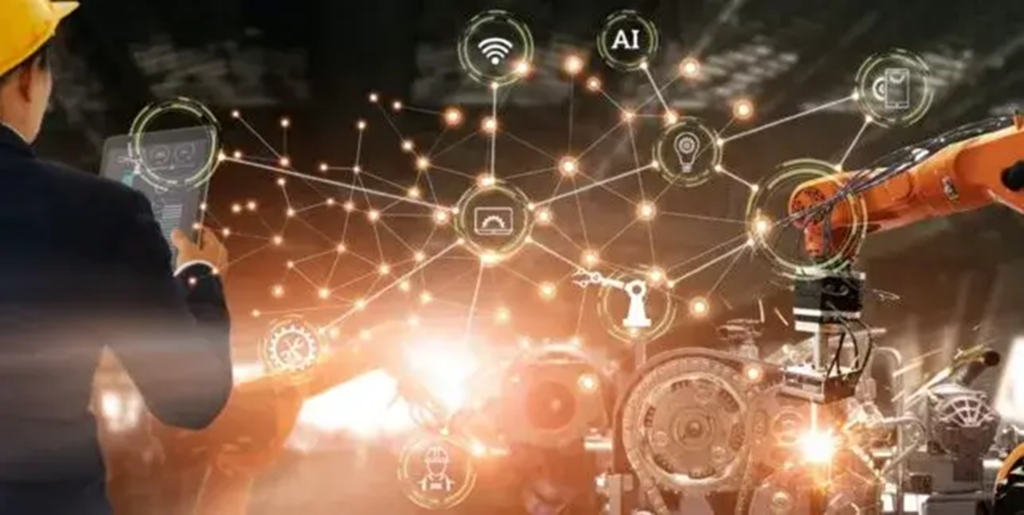
Enhancing Operational Efficiency with AI-Driven Process Performance Prediction In an era where industries are being pushed to operate smarter, faster, and more sustainably, traditional approaches to process management are no longer sufficient. The complexity of modern industrial operations—spanning oil & gas, manufacturing, energy, and chemicals—demands a radical shift in how businesses monitor, optimize, and predict performance outcomes. Unplanned downtime, inefficiencies, and soaring maintenance costs continue to erode profitability, leaving organizations searching for a solution that goes beyond conventional monitoring systems.   Enter process performance prediction, a game-changing capability powered by 3D Digital Twins, AI, and Gen-AI. This transformative technology enables businesses to simulate, analyze, and forecast operational performance with precision, helping them anticipate inefficiencies before they escalate into costly disruptions. By integrating real-time data, advanced machine learning models, and predictive analytics, organizations can unlock new levels of operational intelligence, cost efficiency, and business agility. This paper explores the tangible value of AI-driven process performance prediction and its impact on industrial enterprises.   The Challenge: Operational Inefficiencies and Unplanned Downtime   Industrial organizations operate in complex environments where unplanned downtime, inefficient processes, high maintenance costs, and complex decision-making create significant operational bottlenecks. Equipment failures, process inefficiencies, and regulatory compliance issues often lead to disruptions that hinder productivity and increase costs. Traditional strategies, such as scheduled maintenance or reactive interventions, offer limited effectiveness, as they fail to address problems proactively.   At the heart of this challenge lies data fragmentation and a lack of predictive insights. While industrial operations generate vast amounts of data from sensors, control systems, and enterprise applications, organizations often struggle to extract meaningful insights that inform decision-making. The ability to predict, prevent, and optimize operational performance remains largely untapped—until now.   The Solution: AI-Powered Process Performance Prediction   By incorporating AI-driven process performance prediction, businesses can move beyond reactive and static decision-making toward dynamic, real-time process optimization. 3D Digital Twins, virtual replicas of physical assets and processes, provide the foundation for advanced analytics, enabling organizations to simulate, analyze, and predict operational outcomes with unprecedented accuracy.   Through AI and Gen-AI technologies, companies can:   Anticipate and mitigate equipment failures before they occur, reducing costly downtime and extending asset lifespan. Optimize production efficiency through real-time performance insights, ensuring maximum utilization of resources. Enhance decision-making by providing operators with AI-driven recommendations, reducing human error and improving process control. Reduce maintenance costs by transitioning from reactive and scheduled maintenance to a data-driven, condition-based approach. Ensure regulatory compliance and sustainability by continuously monitoring emissions, energy consumption, and process deviations.   Business Value: Maximizing ROI Through Predictive Insights   The integration of AI-driven process performance prediction into industrial operations yields significant business advantages, ranging from financial gains to operational resilience.   1. Cost Reduction and Increased Productivity: Predictive maintenance and process optimization lower operational expenses by reducing unnecessary interventions and minimizing equipment failures. Fewer unplanned outages translate to higher asset availability and increased production capacity. 2. Strategic Agility and Competitive Advantage: Organizations that leverage AI-driven insights gain a proactive, forward-looking operational model, enabling them to stay ahead of market shifts and industry challenges. Process performance prediction ensures that companies operate with greater flexibility, adaptability, and resilience. 3. Enhanced Decision-Making with AI-Augmented Intelligence: The complexity of industrial operations often requires rapid, data-driven decision-making. AI-powered insights reduce uncertainty by providing actionable intelligence that empowers operators, engineers, and business leaders to make smarter, faster, and more informed decisions. 4. Sustainability and Regulatory Compliance: With increasing regulatory scrutiny and sustainability goals, organizations must closely monitor their energy consumption, emissions, and waste output. AI-driven predictive analytics enable companies to identify inefficiencies, optimize resource usage, and meet environmental standards without compromising performance.   Process performance prediction is no longer a futuristic concept—it is an essential capability for industrial organizations seeking to mitigate risks, optimize production, and drive continuous improvement. By implementing AI-driven solutions such as those offered by Visionaize, businesses can gain a strategic advantage, increase profitability, and build a resilient, future-ready operation.

Enhancing Operational Efficiency with AI-Driven Process Performance Prediction Read More »