
The Hidden ROI of 3D Digital Twins: What You're Missing Out On
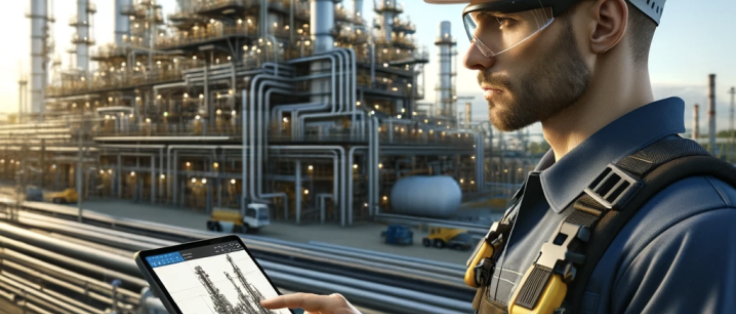
For many businesses, implementing a 3D Digital Twin can seem expensive and complex. In reality, organizations often already have the data they need to unlock measurable ROI through better operations, maintenance, and decision-making.
For many businesses, the idea of implementing 3D Digital Twins can seem overwhelming—something out of science fiction, expensive, and difficult to deploy. In reality, organizations often already possess much of the data needed to begin their digital twin journey.
Imagine Turning Hours of Fieldwork into Minutes
One Visionaize customer summarized the value perfectly: 'An hour in V-Suite is like eight hours in the field.' By combining existing engineering information, laser scans, and operational data into a digital twin platform, companies dramatically reduce time spent searching for information while improving operational efficiency.
You Probably Already Have the Data
A common misconception is that organizations must create expensive 3D models from scratch. In reality, many facilities already have engineering models, CAD files, laser scans, photographs, and project documentation that can serve as the foundation for an accurate Digital Twin.
Where 3D Digital Twins Deliver Value
- Operations — optimize facility performance and reduce downtime through operational visualization.
- Maintenance — enable predictive maintenance and reduce unexpected equipment failures.
- Engineering — virtually test modifications before implementation.
- Projects — reduce project risks through accurate digital representations.
- Inspection & Reliability — monitor asset health using integrated operational data.
- Environmental Health & Safety — improve safety planning and hazard awareness.
- Finance — reduce maintenance costs while improving asset utilization.
- Executives — increase ROI through operational improvements and stronger collaboration.
How Organizations Achieve ROI
- Better decision-making through real-time operational visibility.
- Lower operating costs by reducing manual inspections and duplicate work.
- Improved safety and regulatory compliance.
- Long-term savings from reduced downtime and extended asset life.
A Crawl, Walk, Run Approach
Successful Digital Twin programs rarely begin with enterprise-wide deployments. Instead, organizations typically start with focused use cases that deliver quick value before expanding capabilities across the business.
Crawl Phase
- Rapid time-to-value with minimal investment.
- Leverage existing laser scans and photographs.
- Integrate basic operational data.
- Improve inspections and routine maintenance workflows.
During the crawl phase, organizations overcome common challenges such as disconnected information, paper-based workflows, and limited operational visibility by consolidating existing data into one accessible platform.
Walk Phase
- Expand functionality with richer 3D models.
- Combine mesh models with critical assets.
- Increase system integration across operations.
- Support more advanced maintenance and engineering workflows.
As organizations mature, additional operational systems are integrated into the Digital Twin, enabling synchronized workflows, automated processes, and improved collaboration across departments.
Run Phase
- Enterprise-wide Digital Twin deployment.
- Complete facility and asset models.
- Broad integration with operational systems.
- Advanced analytics, AI, VR, and predictive capabilities.
At full maturity, Digital Twins become the operational foundation for AI-driven insights, predictive maintenance, simulation, forecasting, and eventually closed-loop optimization.
Quick Wins
- Accelerate turnaround planning.
- Improve Mechanical Integrity programs.
- Enhance Risk-Based Inspection.
- Maintain accurate P&ID documentation.
- Reduce planning effort and unexpected downtime.
Case Study
An 80-year-old North American refinery modernized its Mechanical Integrity and Risk-Based Inspection programs using Visionaize's Digital Twin platform.
Solution
- Implemented Mechanical Integrity and RBI software.
- Integrated Visionaize V-Plant with inspection systems.
- Built a laser-scanned, dimensionally accurate 3D Digital Twin.
- Connected P&ID data with plant systems.
- Generated approximately 19,000 new isometric inspection views.
Results
- Unified previously disconnected operational data.
- Improved data consistency and reliability.
- Reduced long-term maintenance costs.
- Achieved recurring ROI exceeding 100% annually.
Conclusion
The hidden ROI of 3D Digital Twins often comes from data organizations already possess. By starting with existing engineering information, laser scans, or CAD models and expanding capabilities over time, companies can realize measurable improvements in safety, maintenance, operational efficiency, and profitability without requiring a massive upfront investment.